Wrong Turn, Right Moment: How Detours Unlock the Ideas You Didn't Know You Needed
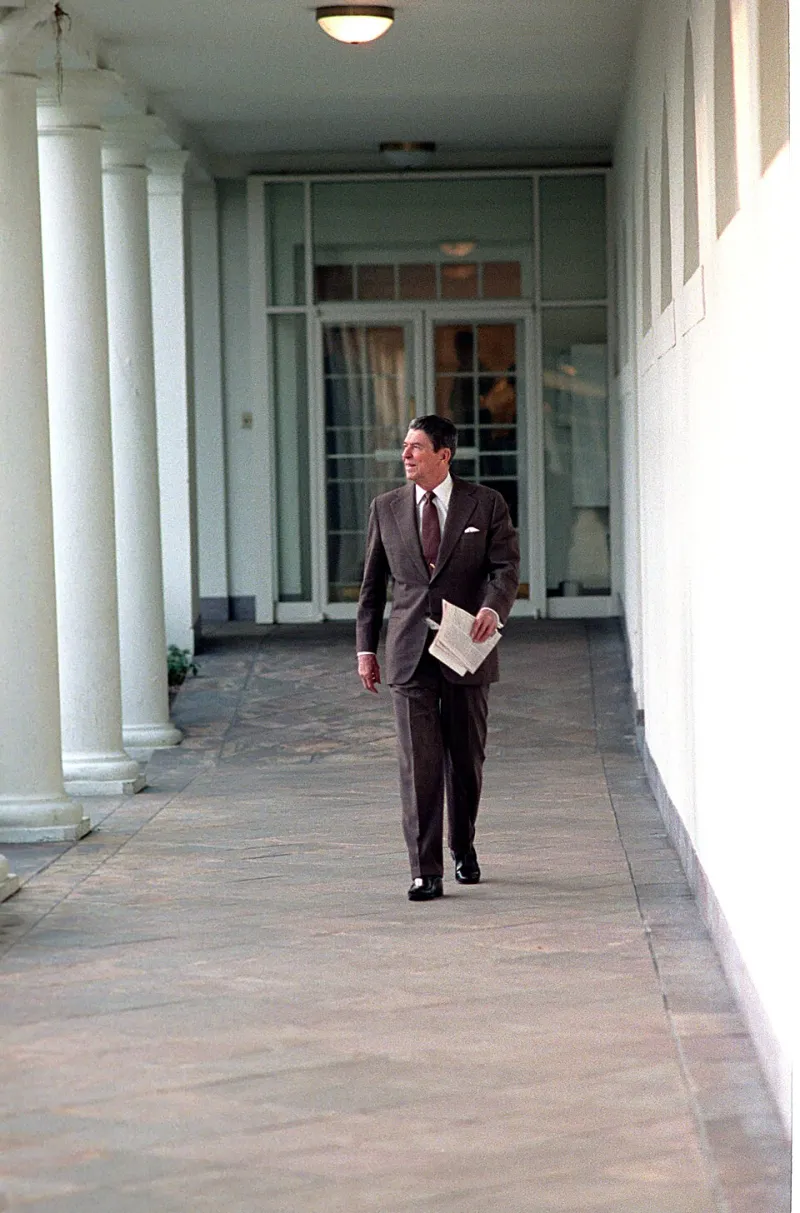
Photo: President (1981-1989 : Reagan). White House Photographic Office. 1981-1989, Public domain, via Wikimedia Commons
The Detour You Didn't Ask For
You've been there. You miss your exit, end up in a neighborhood you don't recognize, and somehow — somewhere between the confusion and the mild irritation — an idea lands in your brain fully formed. Not the idea you were chasing. A better one.
It sounds like a cliché, but there's a reason this keeps happening to people. It's not random luck. It's your brain doing exactly what it was built to do when you stop micromanaging it.
We live in a culture obsessed with optimization. Productivity apps, morning routines, deep work blocks — all of it designed to squeeze maximum output from every waking hour. And look, structure has its place. But there's a growing body of research suggesting that some of our most original thinking happens precisely when we're not trying to think. When we're bored, distracted, or just a little bit lost.
What Your Brain Does When You're Not Watching
Neuroscientists call it the default mode network — a set of brain regions that light up when you're not focused on a specific task. For a long time, researchers assumed this network was basically idle chatter, mental noise with no real function. Then they started paying closer attention.
Turns out, the default mode network is where your brain quietly stitches together unrelated memories, half-formed impressions, and lingering questions you forgot you were even asking. It's the cognitive equivalent of a slow simmer. When you're grinding through a focused task, that network goes quiet. But the moment you step away — take a walk, zone out in the shower, drift through a grocery store — it fires back up and starts making connections your conscious mind would never have reached on its own.
This is why writers talk about ideas coming to them in the middle of the night. It's why engineers have aha moments in the middle of a run. It's why your best shower thoughts aren't a coincidence — they're a feature.
The Accidental Conversation That Changed Everything
Ask almost anyone about a pivotal creative or personal moment and a surprising number of them will trace it back to something unplanned. A flight delay that led to a three-hour conversation with a stranger. A coffee shop they wandered into because it was raining. A job they took only because their original plan fell through.
There's a concept in sociology sometimes called "weak ties" — the idea that the people on the outer edges of your social circle, the acquaintances and near-strangers, are often the ones who introduce you to genuinely new information. Your close friends tend to know what you know. But the person you end up talking to at a barbecue because you both reached for the last beer at the same time? They live in a completely different information ecosystem. That friction, that slight awkwardness of an unplanned encounter, is often where something real gets sparked.
This is one of the quiet arguments against the fully curated life. When every experience is intentional and pre-approved, you eliminate a lot of noise — but you also eliminate the unexpected signal.
Boredom as a Creative Tool
Here in the US, boredom has become almost a moral failing. We fill every gap — waiting rooms, commutes, the three minutes between waking up and getting out of bed — with content. Podcasts, scrolling, background TV. The idea of just... sitting with nothing is genuinely uncomfortable for a lot of people.
But boredom, real unstructured mental downtime, is one of the most underrated creative inputs there is. Studies on children show that unstructured play — the kind with no rules, no goals, no screens — produces significantly more imaginative thinking than structured activities. The same principle applies to adults, even if we've mostly forgotten how to access it.
When you're bored, your mind starts generating its own entertainment. It wanders into problems you haven't consciously decided to solve. It revisits old memories and reframes them. It asks weird questions just to have something to do. That's not wasted time. That's incubation.
The Tension Between Focus and Drift
None of this is an argument against intentional work. Focused effort matters enormously. You can't refine an idea you haven't developed, and you can't develop an idea you haven't had the discipline to sit with. The default mode network generates raw material — it doesn't edit, organize, or execute.
The real skill is learning to move between the two modes without forcing it. Knowing when to push and when to ease off. Recognizing that a walk around the block isn't procrastination — sometimes it's the most productive thing you can do for the thing you're working on.
Some people build this into their routines deliberately. They schedule unfocused time the same way they schedule meetings. Others stumble into it by necessity — a delayed flight, a slow afternoon, a day when the work just won't come. Either way, the outcome is similar: the brain gets the breathing room it needs to do its quieter, weirder, more interesting work.
Leaning Into the Unplanned
Practically speaking, this might mean resisting the urge to fill every gap. Leaving the earbuds out on your next walk. Taking the long way home occasionally. Saying yes to the spontaneous invitation even when it doesn't fit neatly into the plan.
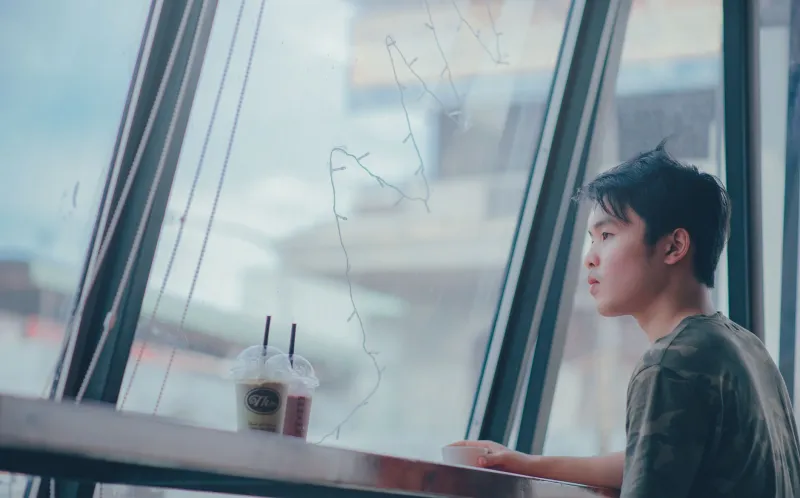
It might also mean being a little gentler with yourself when progress doesn't look like progress. The afternoon you spent staring out the window might have been the afternoon your brain quietly solved something it's been working on for weeks. You just won't know it until the idea shows up — usually at an inconvenient time, in an inconvenient place, completely uninvited.
That's kind of the whole point.
The best ideas don't tend to knock politely and wait. They show up sideways, through the back door, while you're doing something else entirely. The trick isn't to chase them harder. It's to leave the door unlocked and pay attention when something drifts in.