Chaos Is the Method: What Happens When You Finally Let Your Life Get a Little Messy
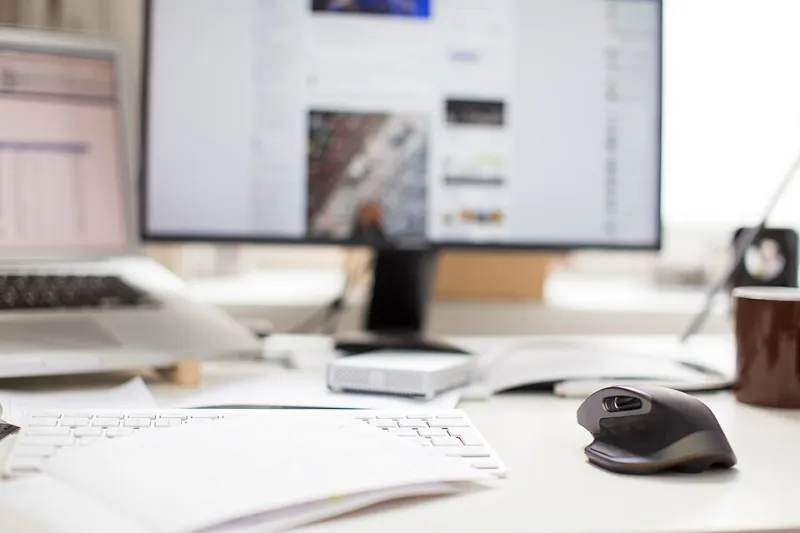
Photo: Taduuda taduuda, CC0, via Wikimedia Commons
There's a particular kind of exhaustion that comes not from doing too much, but from organizing too much. You know the feeling — you've color-coded your calendar, batched your tasks into tidy two-hour blocks, downloaded the fourth productivity app this month, and somehow, despite all of it, you feel less creative, less alive, and more stuck than ever.
Welcome to the paradox nobody's selling merch about.
We live in a culture that has fully committed to the idea that structure equals success. Self-help shelves groan under the weight of systems, frameworks, and five-step formulas. Morning routines have become competitive sports. And yet — quietly, persistently — some of the most interesting people doing the most interesting things are pushing back. Not by abandoning discipline entirely, but by learning to let a little beautiful chaos back in.
The Productivity Trap Nobody Talks About
Here's the thing about optimization culture: it works, until it doesn't. Systems are genuinely useful for managing logistics — bills, deadlines, grocery lists. But creativity isn't a logistics problem. And when we start treating our entire lives like an inbox to be zeroed out, something important gets lost.
Neuroscience has actually been catching up to what artists have known for centuries. The brain's default mode network — the part that activates when you're not focused on a task — is strongly linked to imagination, self-reflection, and what researchers call "associative thinking." That's the mental state where unrelated ideas collide and produce something new. The problem? Hyper-scheduled lives leave almost no room for the default mode network to do its thing. When every minute is accounted for, the mind never gets to drift.
And drifting, it turns out, is kind of the whole point.
"I Threw Out My Planner and Started a Business"
Marcus, a 34-year-old graphic designer based in Austin, Texas, spent the better part of three years trying to systematize his creative process. He had templates for everything — client briefs, mood boards, revision cycles. His workflow was, by any measurable standard, efficient.
"I was producing work," he says, "but I wasn't making anything I was proud of. It all felt like I was filling in blanks."
The shift came during a week when his laptop died and he couldn't afford to fix it immediately. Forced offline, he started sketching by hand, wandering his neighborhood, stopping into shops he'd never noticed. Three weeks later, he'd sketched out the concept for a small print studio that now has a six-month waitlist.
"The broken laptop was the best thing that happened to my career," he laughs. "I stopped managing my creativity and started just... living near it."
His story isn't unique. Talk to enough people who've made unexpected leaps — career pivots, creative breakthroughs, even just a renewed sense of purpose — and a pattern emerges. The turning point rarely involves a better system. It usually involves the collapse of one.
Structure vs. Spaciousness
This isn't an argument against having any structure in your life. That would be naive. Bills still need paying. Deadlines still exist. But there's a meaningful difference between structure that supports your life and structure that replaces living.
Think about the last time you had a genuinely good idea. Not a solution to a problem you were actively working on, but a real, surprising, this-could-change-things idea. Where were you? Most people, when they actually stop and think about it, weren't at their desk. They were in the shower. On a long drive. Halfway through a run that wasn't going particularly well. Sitting on a porch doing nothing in particular.
Spacious moments. Unscheduled ones.
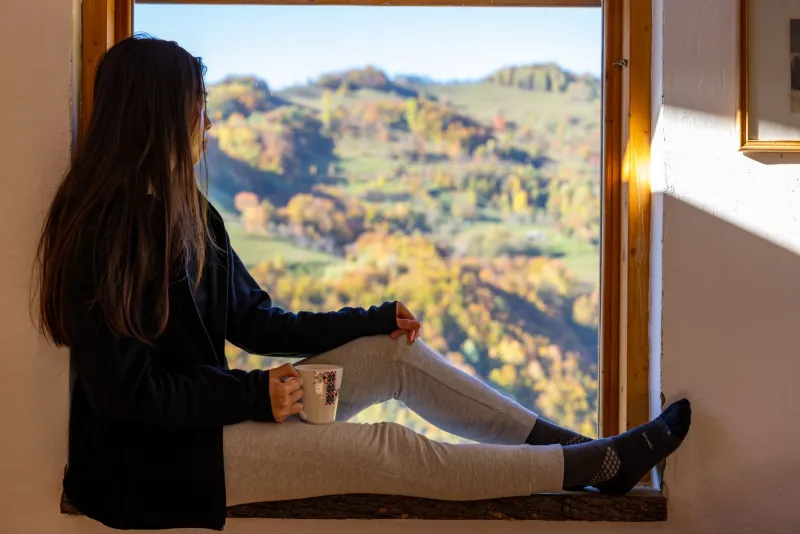
Jenna, a middle school art teacher in Portland, Oregon, describes it as "the gap between the to-do list items." She started deliberately leaving one afternoon a week completely unplanned — no errands, no prep work, no scrolling. Just open time with no agenda.
"The first few weeks were genuinely uncomfortable," she admits. "I kept reaching for my phone. I felt guilty, like I was wasting time." But around week four, she started painting again for the first time in seven years. Not for a class. Not for a show. Just because she felt like it.
"That painting became the thing I'm most known for now," she says. "And it only happened because I had a random Tuesday afternoon with nowhere to be."
The Mess Has Information in It
There's something else worth saying about chaos, and it's this: disorder isn't just the absence of order. It's often the presence of signal.
When your life is too tightly managed, you can miss the quiet indicators — the recurring thought you keep suppressing because it doesn't fit your current plan, the strange pull toward something that makes no practical sense, the half-formed idea you keep dismissing as a distraction. Systems are good at filtering noise. But sometimes what looks like noise is actually the most important thing you're not hearing.
A messy desk, a wandering afternoon, a conversation that goes sideways and ends up somewhere unexpected — these aren't failures of organization. They're data. They're your life trying to tell you something your planner can't hold.
Letting the Drift Back In
So what does this actually look like in practice? It's less dramatic than you might think.
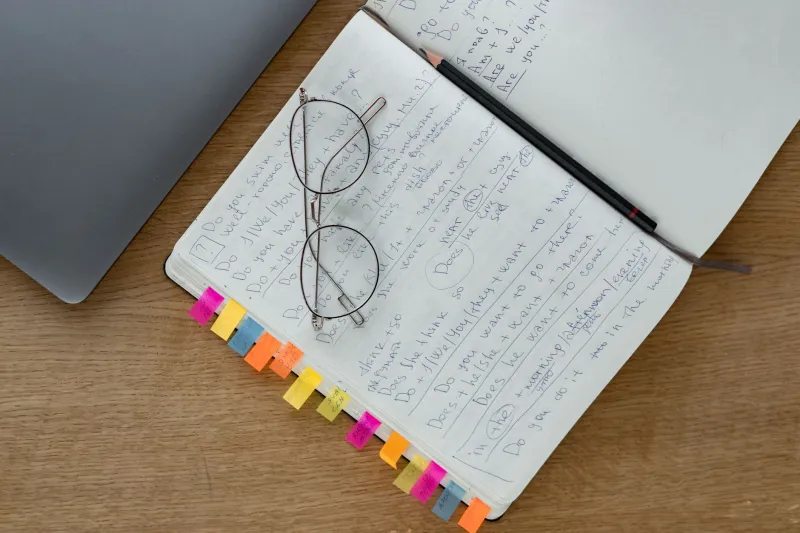
It might mean leaving one morning a week without a plan and seeing where it goes. It might mean keeping a notebook that has no categories, no structure — just whatever lands on the page. It might mean taking a different route home, eating lunch somewhere you've never been, saying yes to something that doesn't fit the current narrative of your life.
It's not about blowing up your routines entirely. It's about loosening them just enough to let something unexpected through.
The best ideas, the ones worth having, rarely arrive on schedule. They tend to show up sideways — in the margins, in the mess, in the moments when you've stopped trying so hard to make something happen and started just being somewhere, present and a little unguarded.
Your planner is a tool. It's not a life.
Sometimes the most productive thing you can do is close it, look up, and let the afternoon take you somewhere you didn't plan to go.